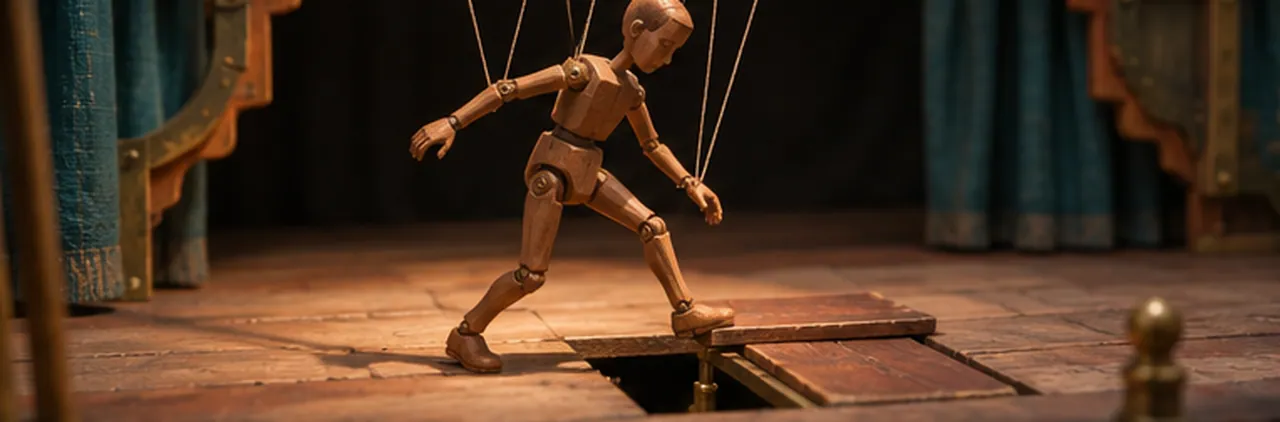
The Footlight Crossing
Set one shoe over a tiny stage trap and hold the actor's ankle line while the other foot takes weight. Explore an original wooden marionette prototype.

Set one shoe over a tiny stage trap and hold the actor's ankle line while the other foot takes weight. Explore an original wooden marionette prototype.
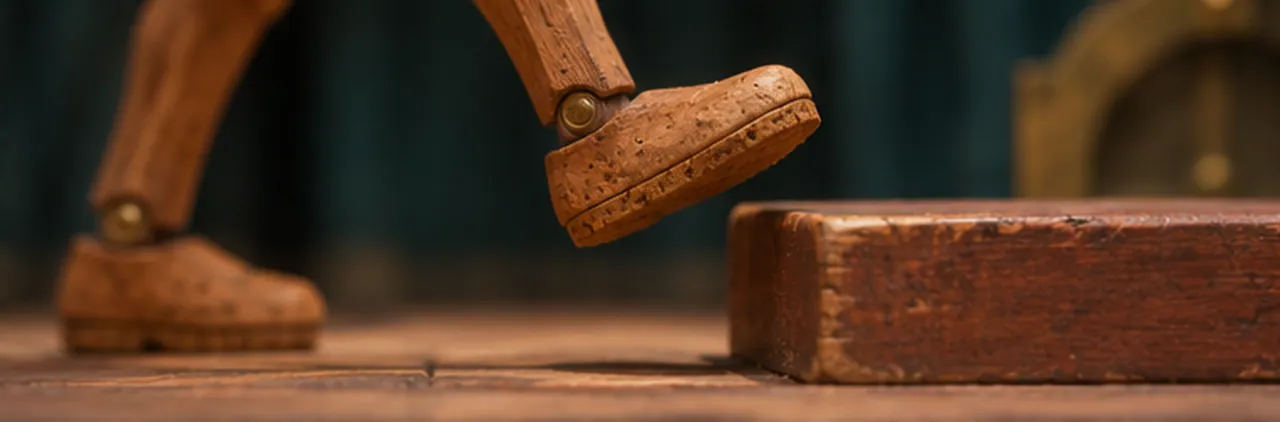
Follow a tiny wooden shoe up to a short stage riser. See where the shadow narrows and why a small pause lets the player read the ankle line before a step.
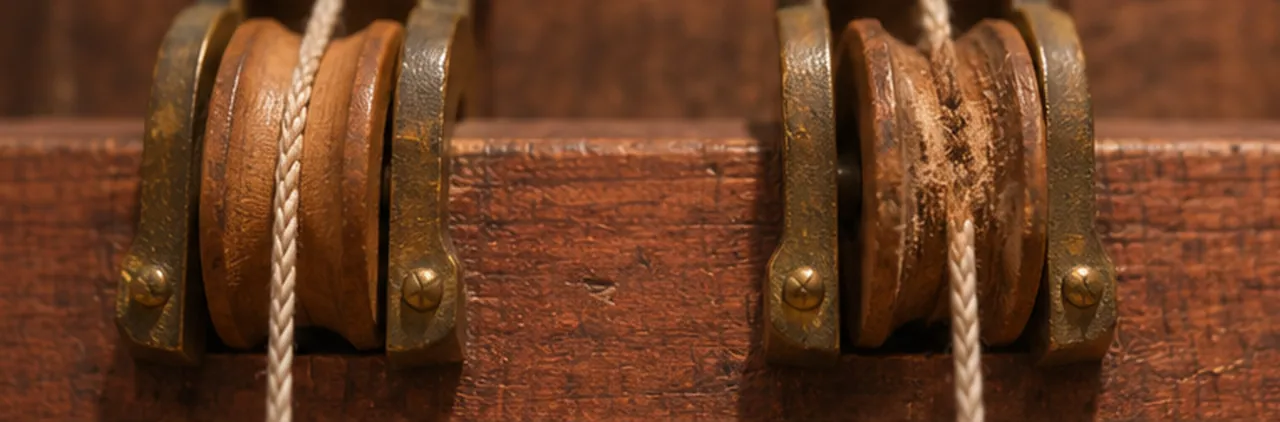
Follow a cord through a shallow wooden pulley. See how its curve changes just before the weight moves and which mark helps a viewer follow its return.
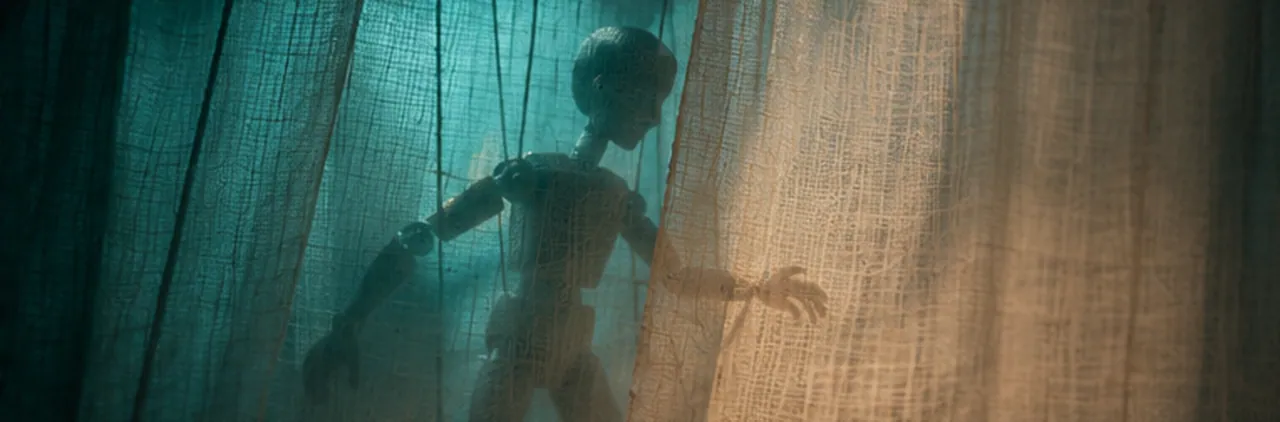
Bring a marionette wrist into a narrow gap in two gauze panels. Hold a string and time the turn so a small audience can see the shape of the gesture.
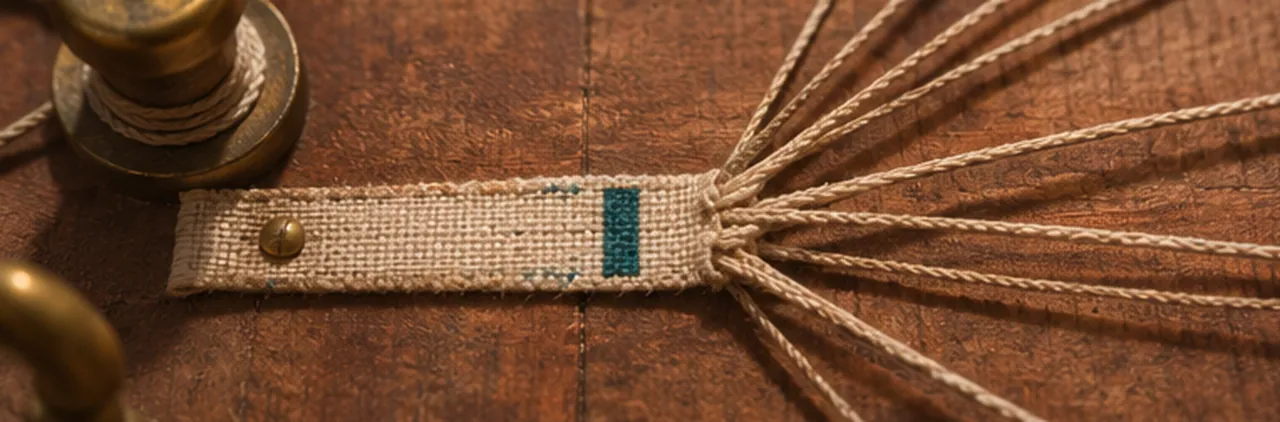
Read how a mark on a cloth tape identifies the first usable point in a wrist cue. Watch an extra line give the arm room to hold while the head turns.
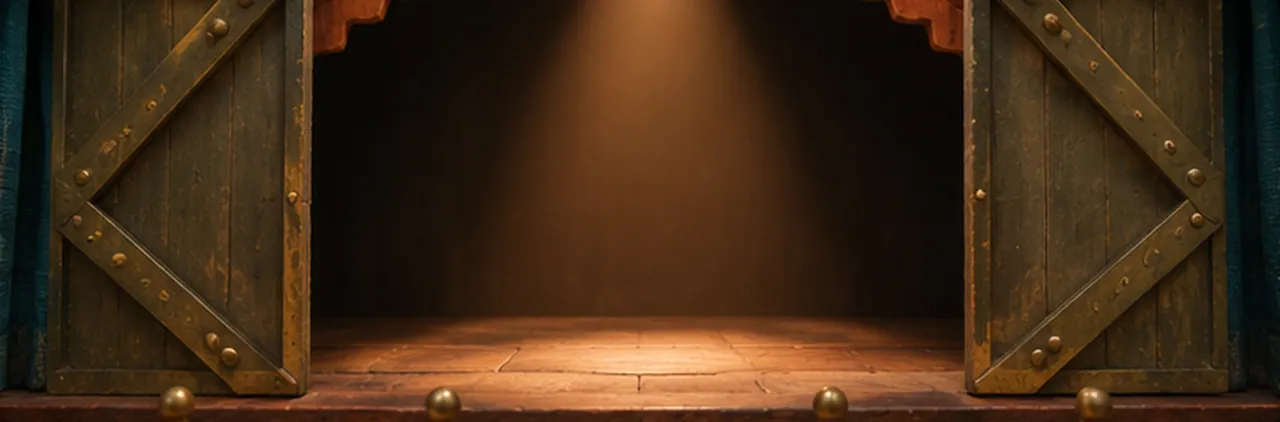
Watch a carved wrist turn behind overlapping gauze panels. Compare three miniature lighting cues and the outline a person can still see from a side seat.
This register follows two original wooden-actor prototypes by stage depth. The downstage section begins where you can read the edge of a board against a shoe. The upstage section deals with cloth that hides part of a gesture. Each entry starts with a playable set and uses smaller notes to show what brings its movements into view. Follow a note to look closely at a material question, then return to see what the same detail asks the player to do on the stage.
The Footlight Crossing places a shallow trap across a small familiar deck. The visible part of the complication is the short dark line where the first board ends. Above that line a small actor must deal with a string that has gone slack. The board surface gives the player a measurable place to put the first shoe. The nearest groove also gives you a way to see where the knee has gone. Tension at the Riser studies that placement at a lower height. Groove and Return covers the point at which the line carrying the rear shoe moves around a small pulley.
A Cue Behind Gauze stages a wrist turn between two woven screens. A narrow break in the cloth layers reveals the outside edge of the actor’s hand. If the wrist falls before the actor reaches the light, the audience sees little of the change. The set is designed to offer several chances to learn where a gesture reads clearly under a different angle. Waiting by the Tape gives the control side of the timing question. The Narrowest Lit Gap follows the view from a nearby seat and shows what survives when the two cloth edges overlap. Return to Rehearsal Dates for the full set of experiments and the article associated with each date.